
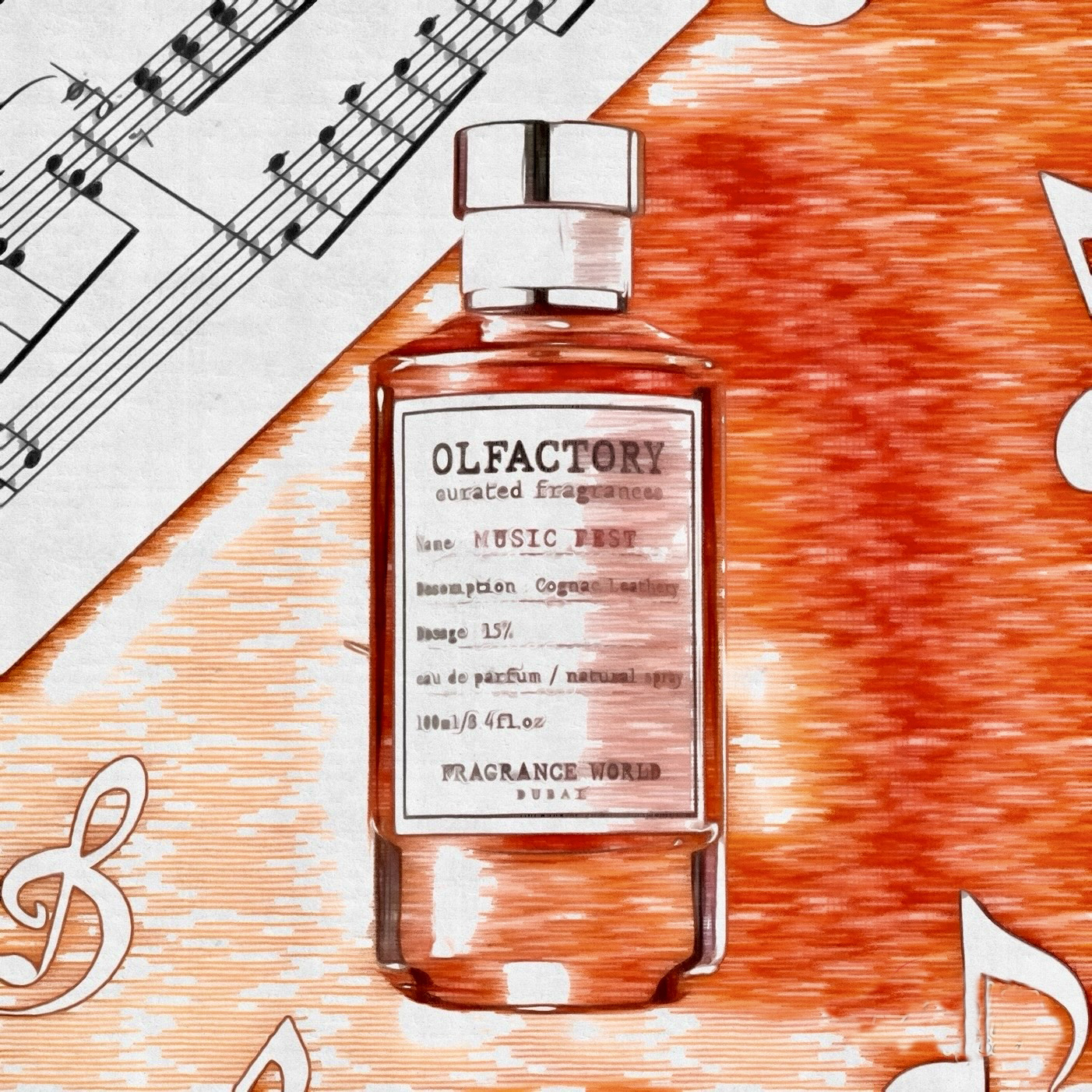
A Symphony of Scent and Song ~ with Japanese Resonance
In Western music, twelve chromatic notes form the backbone of harmony, from Bach’s intricate fugues and Debussy’s dreamy Prélude à l’après-midi d’un faune to Stravinsky’s earth-shattering Rite of Spring. Each semitone is a brushstroke on a sonic canvas, building chords and motifs that thrill and surprise. Perfumery borrows the term “notes” too, but spins it differently: top, heart, and base layers that bloom and fade on the skin. When a fragrance boasts “twelve notes,” it’s often more marketing flourish than formula, an artful wink to complexity that hints at a symphony in a bottle.
And yes, twelve notes make an octave in Western music, but climb the scales and you get four octaves. Just as AKB48’s 48 members, divided by 12, playfully nod to four: seasons, octaves, or idol subunits. Numbers, it seems, can be both rationally precise and gloriously symbolic.
The codification of fragrance families in 19th-century France (Chypre’s mossy drama, Oriental’s spiced warmth, Floral’s blooming bouquets) resembles musical genre labels. Perfumers today conduct accords like orchestras, layering bright citrus top notes over floral or spicy hearts and grounding bases. Structurally, perfumes unfold like symphonies: a top-note overture, a heart-note development, and a base-note finale. The emotional arc mirrors that of a well-structured symphony: startling, seducing, resolving, each stage a movement in both scent and soul. Like music, scent triggers memory. A jasmine heart can summon childhood summers; a base of vetiver and smoke might unearth forgotten grief.
In Edo Japan, the Way of Incense (kōdō) elevated scent to ritual art. Practitioners inhale successive incense “notes” and judge them in poetic contests, following jo-ha-kyū pacing: an allegro opening, a deep adagio heart, and a presto finale. This mirrors musical movements in olfactory form.
True twelve-note perfumes wield the dozen for storytelling, not strict counting. Guerlain’s Shalimar, famed for its dozen accords (bergamot, iris, vanilla, incense, tonka bean, and more), illustrates how each note evokes memory. Contemporary Japanese names like Shiseido’s Zen or Kai’s Sakuragawa blend tradition and innovation, infusing incense-inspired hearts with marine and gourmand top notes. One could also look to the contemporary Japanese perfumer Kōsui Takasago, known for his seasonal blends that echo traditional kōdō while embracing global notes like oud and leather. Imagine a fragrance mapped to Japan’s seasons: sakura blossom and green tea for spring’s delicate overture, yuzu and shiso for summer’s vivacity, maple-wood and roasted rice for autumn’s adagio warmth, hinoki cypress and smoky incense for winter’s hushed finale.
Patrick Süskind’s Perfume: The Story of a Murderer offers a darker counterpoint. Jean-Baptiste Grenouille’s obsessive quest for the perfect scent, first haunting fish markets, then resorting to murder, shows that the chase for perfection can morph into madness. In music and perfumery alike, the pursuit of the flawless chord or blend risks sacrificing emotional authenticity on the altar of precision. Think of the over-orchestrated pop ballad so auto-tuned it loses its soul, or the perfume that smells like a spreadsheet: balanced, calculated, and utterly forgettable.
A masterful twelve-note scent can sound like a bamboo flute dancing over taiko drum thunder, textures that surprise. On skin, it feels like silk kimono brushing pulse points, cool then warming with body heat. Visually, picture a mist of liquid jade, pearl, and amber, ink on rice paper. Top notes vanish like sakura petals (mono no aware), leaving a soft ache. Then heart and base settle into wabi-sabi, smoky labdanum crackling like kintsugi, celebrating imperfection, not despite it, but because of it. Where Western aesthetics often chase idealized flawlessness, Japanese beauty embraces the transient and the becoming. Wabi-sabi finds soul in the cracks; what the West might erase, Japan elevates.
Today’s fragrance landscape reflects cross-cultural fusion. Western houses import hinoki and matcha; Japanese brands embrace oud and ambergris. This fragrant dialogue proves scent, like music, transcends borders. The influence flows both ways; niche perfumers worldwide now cite kōdō and seasonal Japanese aesthetics as touchstones. And we still crave the irrational. Imagine a Tokyo wedding DJ dropping The Police’s “Don’t Stand So Close to Me” mid–first dance, an absurd delight. A perfumer might similarly slip in sanshō pepper or matcha accord, that playful hiccup that keeps us hooked.
Just as the recent hit “APT.” by ROSÉ and Bruno Mars transforms a simple Korean drinking game into a global pop anthem, blending playful chants with flirtatious lyrics and cross-cultural energy, so too does modern perfumery thrive on surprise and connection. The song’s infectious repetition of “apateu” (apartment) and its invitation to “meet me at the APT.” mirror the way a perfumer might slip in an unexpected note, like matcha or sanshō pepper, to spark delight and anticipation. Both the song and a well-crafted fragrance celebrate spontaneity and youthful connection, reminding us that the most memorable experiences, whether in music or scent, are those that invite us to play, to gather, and to savor the unexpected.
Perhaps it’s our shared hunger for the unexpected that unites scent and sound lovers. From the fleeting swirl of top notes to the resonant cello lines, life’s richest experiences live between the lines. So next time you spritz a “twelve-note” perfume or lose yourself in a chromatic scale, ask: where does the thirteenth, irrational beat lie?
Author’s Note:
We began with Bach and Debussy, detoured through Shalimar and Perfume, survived a rogue Police track at a wedding, and still somehow landed on AKB48 doing seasonal math. If you spotted fewer than twelve notes, congratulations: you’ve found the silence between them, where real magic happens. Bonus points if you heard four octaves echoing in the background.
And yes, APT. stands for apartment. That’s where I’m writing this, eating cake and drinking coffee, with music echoing through all four octaves. Now go smell the world in high fidelity.


Leave a Reply to Tammy Cancel reply