
The art of storytelling, structure, a good yarn, and the human touch.
There is something funny about the Moon. It sits there with complete confidence, as if it has never once had to explain itself to anyone.
Apollo went there and made the impossible look briefly reasonable. But that was a different era. Artemis is our reality now. Even with the weight of the news and the turmoil that seems to consume the world at the moment, the Moon remains. We aren’t watching with the same singular roar of the sixties, but perhaps we are watching with something more focused: a quiet need to see that we can still reach for something beyond our own shadows.
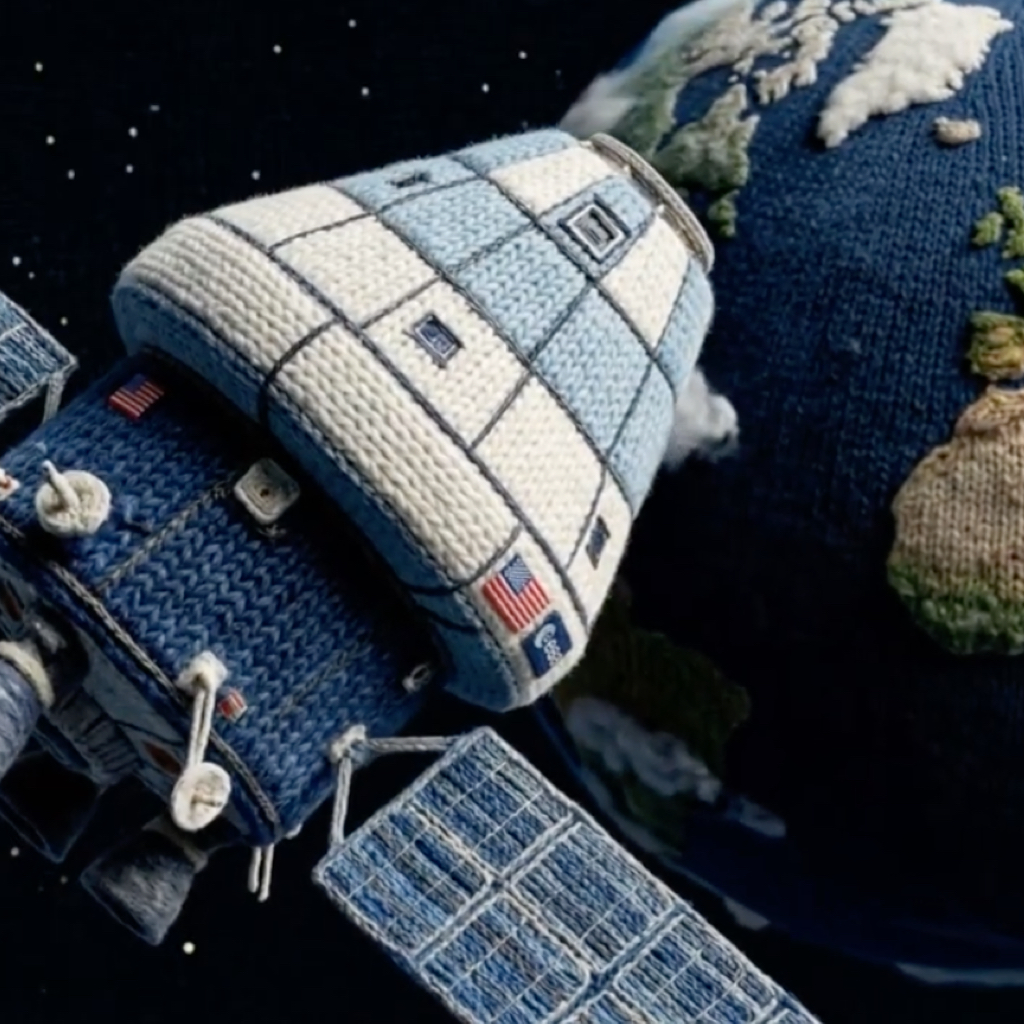
Atriums (アトリウムズ) is a short film about that flight. It looks at the journey of Artemis the way a good sketch looks at a memory: same spirit, slightly different handwriting.
The film is a collaboration between human stop‑motion and AI. I chose to render this cosmic journey in wool. I wanted to use a tactile, physical medium to tell a story about cold, hard physics. Even here, the final few meters want a human hand and a human eye. It takes a person to say, “All right, let’s try this carefully.” The machine can learn the words, but a human has to choose the yarn. In an era of generative noise, this is about keeping the Human Signal loud and clear. 50 years of waiting for a window in the dark, for a mission that belongs to every heart.
I wrote this for the kids who still draw rockets in the margins of their notebooks, or the kids in us that still use our pencils as rockets to blast off our memo pads duning those long meeting, even when the world feels fragile. It’s for anyone who needs to see that we are still capable of building things that work and things that matter.
On April 1st, 2026, four people – Reid, Victor, Christina, and Jeremy – left Earth in a machine called Integrity. They went to prove that real people can still navigate the dark. Atriums is a tribute to that spirit: part memory, part respect for everyone who ever pointed a machine at the sky and believed we could find our way back.
One small step for a coder, one giant leap for the soul. It’s not a documentary. It’s a feeling about what happens when something impossible turns quietly real.
Now, did we actually land on the moon?
Atriums is a tribute to that spirit: part memory, part playful yarn, and total respect for everyone who ever pointed a machine at the Moon and believed it could come back in one piece.
This isn’t a film about Artemis II. It’s a feeling about what happens when something impossible turns quietly real.
Now… did we actually land on the moon? Yes, on the eagle
And is AI going to take over the world? Well … only our Consciousness Mirror, navigating the AI illusion, will tell.
Now, where did I leave my coffee cup after splashdown?
__________
Author’s Note;
This is a playful salute to Apollo, to Artemis, to lunar ambition, and to the stubbornly human habit of trying anyway. Atriums is my little tribute to that spirit: part game, part memory, part joke, and part respect for everyone who ever pointed a machine at the Moon and believed it could come back in one piece.
Now… where did I leave my coffee cup after splashdown???
アトリウムズ II
月は、誰に説明する必要もないほど、圧倒的な自信を持ってそこに存在しています。
アポロ計画はかつて、不可能を「理にかなったもの」に変えました。しかし、それはもう遠い過去の話。今の私たちの現実はアルテミス計画です。日々流れる重いニュースや、世界を覆う混迷の中で心が休まらない時でも、月は変わらずそこにあります。60年代のような熱狂的な歓声ではないかもしれませんが、今の私たちは、もっと切実な思いで空を見上げている気がします。自分たちの影を越えて、どこか遠くへ手が届くのだと信じるために。
短編映画 『Atriums (アトリウムズ)』 は、その航海を描いた作品です。アルテミス計画の旅路を、まるでスケッチが記憶を辿るように描きました。精神は同じでも、筆跡が少しずつ異なるように。
この映画は、ストップモーションによる手仕事とAIのコラボレーションです。私はこの宇宙の旅を、あえて「羊毛」で表現することを選びました。冷たく硬い物理学の世界を、温かく質感のある素材で伝えたかったのです。最後の数メートルは、結局のところ人の目と手に頼ることになります。「よし、ここは慎重にいこう」と決める感覚が必要なのです。機械は言葉を学ぶことはできても、どの糸(yarn)を選ぶかを決めるのは人間なのです。 生成AIというノイズが溢れる時代だからこそ、人間のシグナルを鮮明に保つこと。
この作品を、世界がどれほど不安定に見えても、ノートの隅にロケットの絵を描き続けている子供たちに捧げます。私たちがまだ、正しく動き、意味を持つ何かを作り出せるのだと思い出したい、すべての人へ。
2026年4月1日、リード、ビクター、クリスティーナ、そしてジェレミーの4人は、宇宙船『インテグリティ』で地球を離れました。彼らが証明したのは、たとえ脆い時代であっても、人間は依然として暗闇の中を航海できるということです。アトリウムズは、その精神へのオマージュです。記憶であり、そして機械を空へ向け、私たちが再び道を見つけられると信じ続けたすべての人々への敬意の印です。
プログラマーにとっては小さな一歩かもしれませんが、魂にとっては偉大な飛躍です。これはドキュメンタリーではありません。不可能が静かに現実へと変わる瞬間の「手触り」を描いた物語です。
さて、私たちは本当に月に降り立ったのでしょうか?
もちろん、そうです。 AIは世界を支配するのでしょうか?
それについては… 「私たちの意識の鏡(Consciousness Mirrors)」が、AIの幻想をどのように見つめているかに尋ねてみてください。
ところで…
着水した後のコーヒーカップ、どこに置いたっけ?るかに尋ねてみてください。
ところで…
着水した後のコーヒーカップ、どこに置いたっけ?
Leave a Reply