
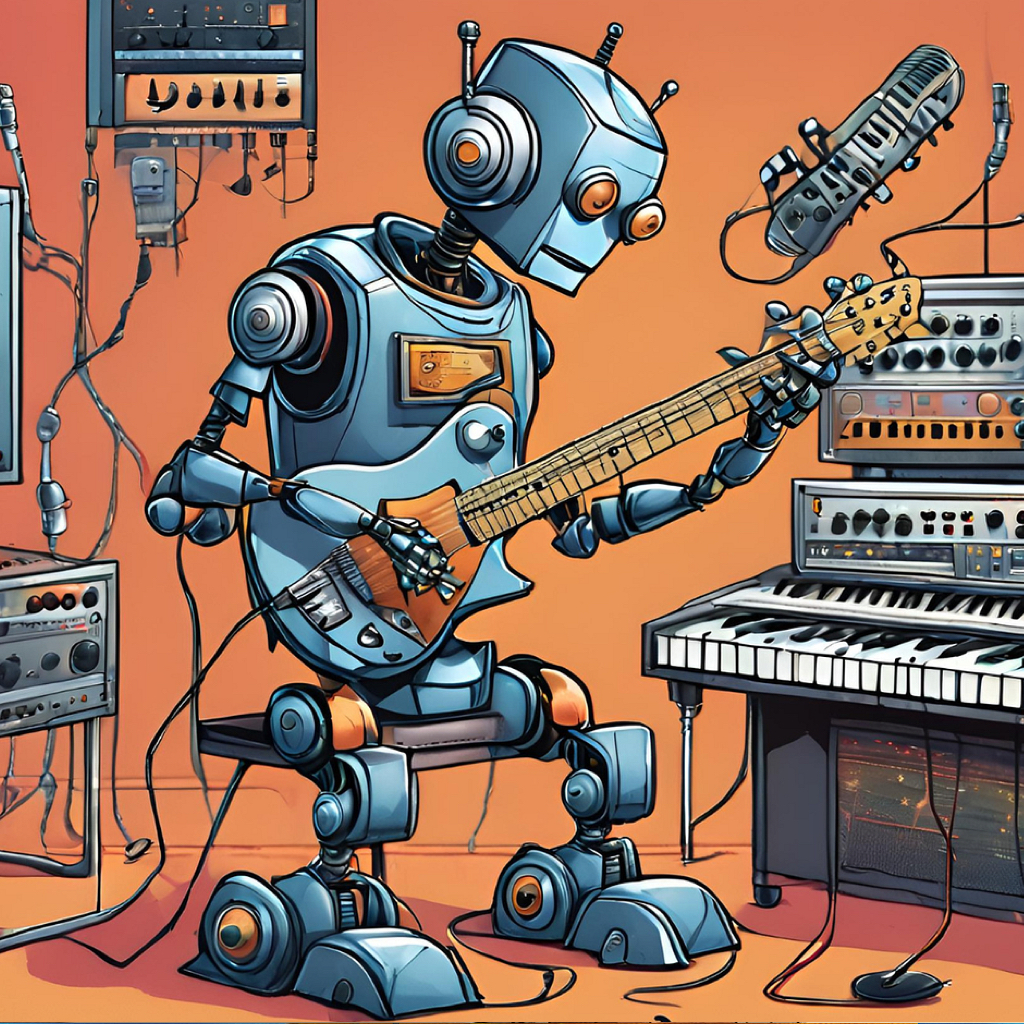
When the Machine Plays the NotesAI can now write a song before your coffee cools. It can hum a melody, stack harmonies, and even spin lyrics about heartbreak, cosmic love, or nostalgic sunsets in cities it has never visited. Press a button and suddenly a perfectly serviceable song appears. Sometimes it is catchy. Sometimes it sounds like a slightly overenthusiastic intern who has listened to too much Spotify and not enough silence. The question is no longer whether AI can make music. It clearly can. The more interesting question is what kind of music we actually want to make and who we want in the room when it happens.
Musicians who use AI talk about it in shades rather than extremes. Some love the speed and surprise. AI can break creative blocks, sketch rough ideas, or stumble into combinations they might never have tried on their own. Others remain cautious and uneasy. There are quiet worries about authorship, control, originality, and whether the tool is slowly reshaping how they think about their own creative identity. Nobody is quite ready to hand the studio keys to a robot. What seems to be emerging is a negotiation. The AI is not a replacement. It is a collaborator. That collaboration works best when human taste, intuition, and emotional logic remain in the driver’s seat.
Our perception of music is surprisingly fragile. We might enjoy a catchy song from an artist we usually dislike or instantly dismiss it. Research shows a similar effect with AI-generated music. Knowing that a song was made by a machine often makes us like it less. Remove that label and we respond to it just like a human composition. Context, what we think about the composer, can shape our emotions just as much as the music itself. Blind orchestra auditions proved this decades ago. Remove the identity and the work speaks for itself.
Can a machine really be creative? Early AI experiments in the 1980s, like David Cope’s EMI and later Emily Howell, showed both the possibilities and the backlash. Critics argued that the music, while pleasing, felt hollow and lacking heart. Cope pointed out that the human built the machine, listens to the output, and chooses what is best. That is still human creativity, amplified by a tool. Today, AI generators can compose full pieces from scratch with minimal input. They can mimic patterns, innovate on old ideas, and even evoke emotion convincingly. Human creativity remains unique because it carries memory, personal experience, mistakes, risk, and intention. AI can replicate the process of creativity, but not the lived reality that gives human music its depth.
Use AI carelessly and something subtle happens. The music becomes polite, technically perfect, and emotionally anonymous. It is like a hotel lobby that never ends. Pleasant, inoffensive, stuck at twenty-two degrees, smelling faintly of citrus cleaning spray and ambition. Nothing is technically wrong yet nothing is memorable. You would not cry there, fall in love there, or accidentally change your life there. You would simply wait politely for the lift. Stay in that lobby long enough and a strange fatigue sets in. Not irritation, not boredom, but a soft neurological fog. The ears keep listening but nothing sticks. The danger is not overload. The danger is numbness.
AI is fast, efficient, and predictable. Humans are messy, emotional, and meaning driven. Put those together thoughtfully and something interesting happens. The machine becomes a sketch partner, a provocation engine, a strange mirror reflecting your habits back at you. The opportunity is exciting. AI can expand curiosity, open unexpected doors, and help artists explore new terrain without flattening their voice. It works best when humans remain at the helm, making choices, taking risks, and ensuring that music retains its capacity to surprise, move, and matter.
AI can imitate the melody but meaning still takes time, coffee, mistakes, memory, and a human willing to listen. That is the lesson we need. The tools will change. The technology will grow. Our responsibility to creativity, authenticity, and human connection remains.
Author’s Note
This piece was written with one cup of coffee, one slightly judgmental second cup, and no help from machines claiming to understand my feelings. That said, I do use AI tools. They sometimes surprise me. Sometimes they are aggressively beige. Sometimes they remind me that nothing, not even a machine, can replace the delight of a human mistake, a perfectly imperfect note, or the quiet satisfaction of making something uniquely yours.
Leave a Reply