
Career paths rarely unfold in straight lines. They fracture, pause, double back, and occasionally collapse in ways that only make sense years later. Barry Ashworth’s professional journey is a clear example of this. Rather than following a single, uninterrupted ascent, his path has been defined by reinvention, recalibration, and the careful reassembly of experience into something stronger than what came before.
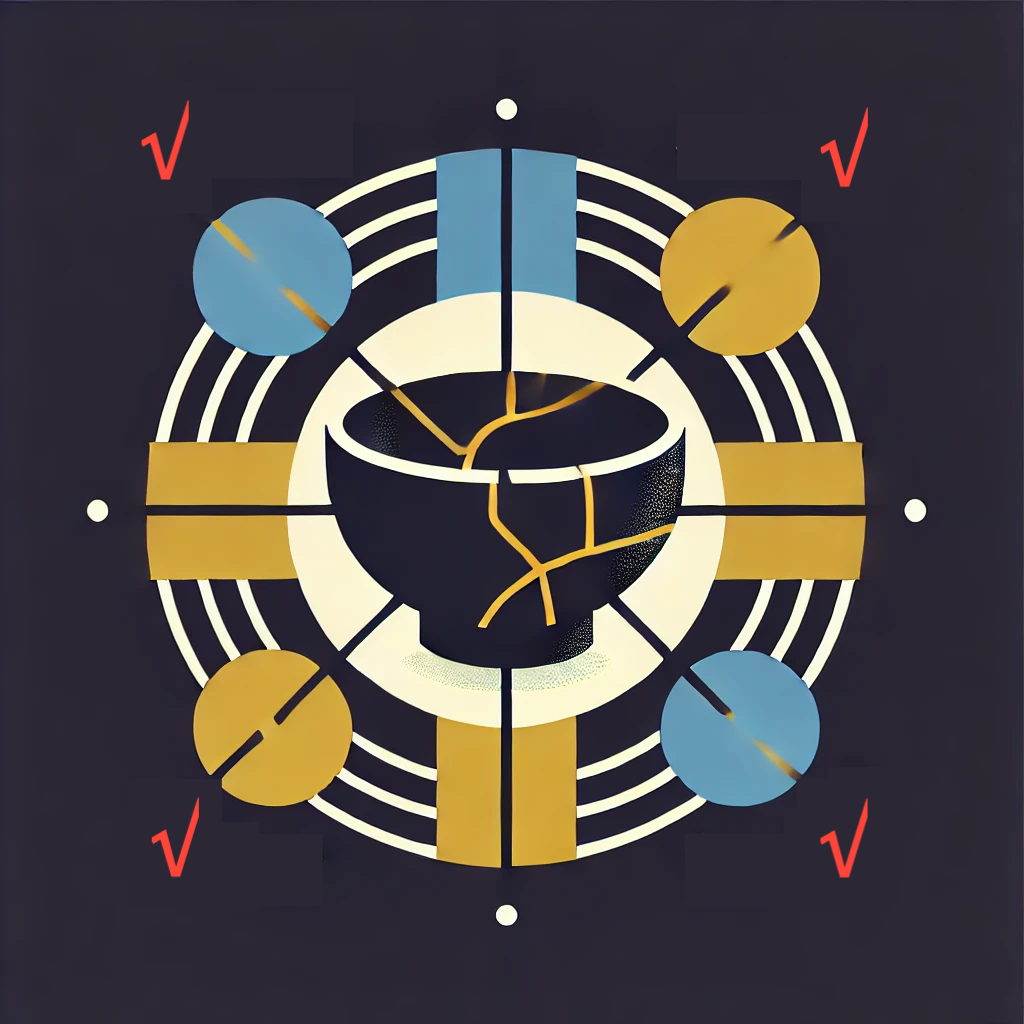
The Japanese art of Kintsugi offers a useful metaphor here. Broken pottery is not discarded or disguised. The cracks are repaired with gold, making the damage visible and meaningful. In Barry’s case, career breaks, pivots, and perceived failures became structural features rather than flaws. They informed later decisions, sharpened his sense of purpose, and ultimately shaped a more resilient professional identity.
At the center of this process sits Ikigai. Not as a slogan, but as a working framework. Barry’s most successful transitions came when he aligned what he was good at, what he cared about, what people actually needed, and what could realistically sustain him. When those elements drifted apart, friction followed. When they aligned, progress became steady again.
Rather than treating reinvention as an emergency response, Barry approached it as an ongoing practice. Periods of uncertainty became diagnostic rather than catastrophic. Skills were reassessed. Direction was adjusted. Technology, particularly AI based tools for learning, analysis, and creative support, became a way to repair gaps rather than overwrite experience.
This approach eventually evolved into a structured model that others could use. What began as personal necessity became a repeatable framework for navigating career disruption with intention.
The Fractured Gold Framework in Practice
Barry’s work can be understood in three broad stages.
Stage One: The Fractures
Early career setbacks were not immediately productive. They felt like stalls, detours, and losses of momentum. Over time, Barry reframed them as signals. Each disruption highlighted a mismatch between effort and purpose. Rather than erasing these moments from his professional narrative, he documented them. Patterns emerged. The cracks started to outline where gold could eventually sit.
Stage Two: The Gold
Rebuilding focused on small, deliberate improvements. Skills were updated incrementally. AI tools were used to identify gaps, test ideas, and reduce friction in learning. Past failures were reinterpreted as proof of adaptability rather than incompetence. Storytelling became a critical tool. Not to polish the past, but to make sense of it honestly.
Stage Three: The Masterpiece
The final stage was not a finish line. It was integration. Barry developed a professional model flexible enough to absorb future shocks. Career identity became modular rather than brittle. Purpose remained central, but not rigid. The result was a sustainable way of working that treated change as a constant rather than a threat.
Outcomes
Barry’s approach led to clearer decision making, stronger professional narratives, and a reduced fear of failure. Setbacks no longer required reinvention from scratch. They required repair. The gold was already there.
More importantly, this framework proved transferable. Others navigating redundancy, career pivots, burnout, or entrepreneurial false starts were able to apply the same principles. Not by copying Barry’s path, but by learning how to read their own fractures.
Closing Reflection
A career is not defined by how often it breaks, but by how thoughtfully it is repaired. The value does not lie in pretending nothing went wrong. It lies in choosing to rebuild with intention, visibility, and care.
The fractures do not disappear. They become the structure.
Author’s Note
This case study came out of a simple observation. Most career advice assumes continuity. Real lives do not.
Barry’s story stood out not because it was unusually dramatic, but because it was unusually honest. The breaks were not framed as heroic detours or hidden behind tidy success metrics. They were acknowledged, examined, and used.
I am drawn to Kintsugi as a framework because it resists the fantasy of the reset button. There is no clean slate here. There is memory, context, and repair. That feels closer to how learning actually works, especially now, when technology accelerates change faster than identity can keep up.
This is not a prescription. It is a way of looking. If it encourages someone to stop erasing their past and start reinforcing it, then it has done its job.
And if it feels unfinished, that too feels appropriate. Repair is an ongoing process.
Leave a Reply