
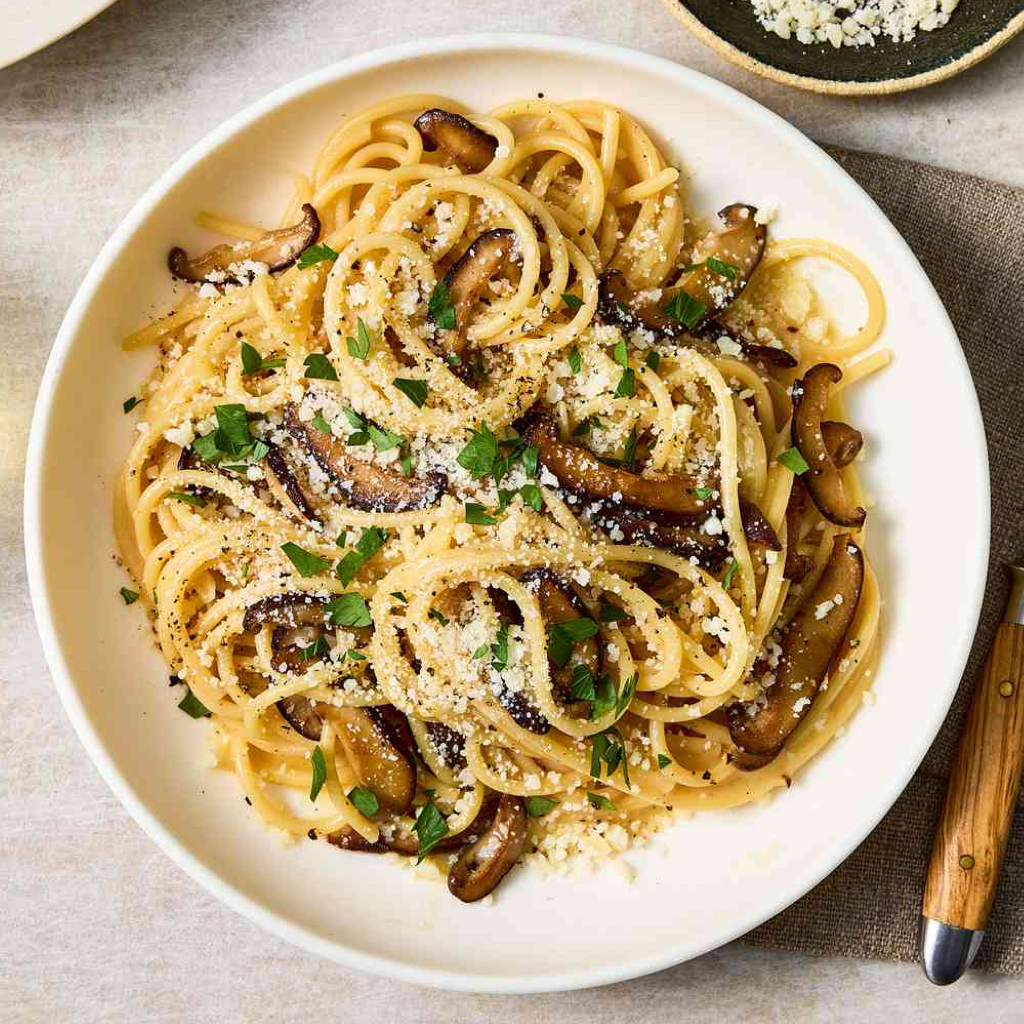
A man makes pasta, not because it is particularly impressive or because anyone asked him to elevate the evening, but because there are children in the next room who have decided that time has stopped and dinner is now late. Pasta does not care about this urgency. It does not speed up because voices get louder. It does not respond to negotiation or repeated questioning. It cooks at the same pace it always has, which is part of its usefulness. In a house that feels increasingly reactive, pasta remains indifferent.
This is how I make it, and the ingredients are aggressively simple:
60 to 80 grams of pasta
A small amount of olive oil
Cut bacon, about two slices
Some broccoli
Some mushrooms
Some spinach
4 to 5 tablespoons of dashi … of course
Some soy source
Some pepper
Note; Some = just enough or whatever’s left in the fridge.
That is enough to begin. Not perfect, not ambitious, just enough.
Fry bacon and veggies first, then toss with cooked pasta, dashi, soy, and pepper. It’s ready in 15 minutes, ideal for quick dinners or a snack.
You fill a pan with water and let it come to a boil, make sure to turn it on. If you salt the water, it is because you remembered, not because you are disciplined. Both are acceptable outcomes, though one feels better. The pasta goes in, and then you wait, which is the first point of friction. Waiting, in a kitchen full of small distractions and larger expectations, feels inefficient. Still, there is nothing to be done. Boiling is a closed system and does not benefit from supervision.
Take a little of the cloudy water and set it aside or all of it just in case. This looks deliberate, which is useful, even if the decision arrived late. The pasta is drained and returned to the pot. Butter goes in. Herbs follow. You stir. At this stage, it is food. Not remarkable, but complete. If you stopped here, no one would complain, and that is worth noting.
On nights when you actually have time, you keep going. Bacon goes into a pan. It begins loudly and then settles, which is reassuring. Vegetables follow. Broccoli, mushrooms, spinach. They do not need to be precise. Rough edges are fine. This is not a performance, and no one is grading your knife work. They go into the same pan and soften slightly, picking up whatever the bacon leaves behind. While this is happening, the pasta waits. When everything is ready, it all comes back together. The pasta goes into the pan with the bacon and vegetables. At this point, you might add a small amount of dashi, and a little soy sauce. Not enough to explain, just enough to shift things slightly. Then you add some of the reserved water.
Everything goes back together in the pan. The bacon, the pasta, the vegetables. Then you add some of the paster water. This is where something changes. The starch, and the liquid come together into something that looks more intentional than it is. The sauce becomes glossy and begins to cling. It suggests effort, which is often enough.
You put the lid on and leave it for a minute or two. Not because it is strictly necessary, but because it feels right to let things settle. Some processes benefit from being left alone, even if you don’t. Children do not always respond to ingredients, but they do respond to language. So you give it a name that has nothing to do with what it is. “Bacon ninja noodles” works. Cheese helps. Cheese almost always helps.
There is something useful in this kind of cooking. One pot, minimal decisions, a sequence that does not change depending on your mood. It does not ask you to optimize or improve or explain. It simply asks that you continue, step by step, until something appears. In that sense, it is closer to making bread than it first seems. Not in technique, but in temperament. You start, you follow through, and at some point, without much drama, you have something warm that holds the evening together. Which is, often, enough.
Author’s Note
If you forget to save the pasta water, you can add regular water and proceed with confidence. The difference is real but rarely important to anyone under the age of ten. Also, the name of the dish matters more than the recipe, which is either a useful parenting insight or a mild concern. And, like most things, it works best if you stop interfering just before you ruin it.
Leave a Reply