
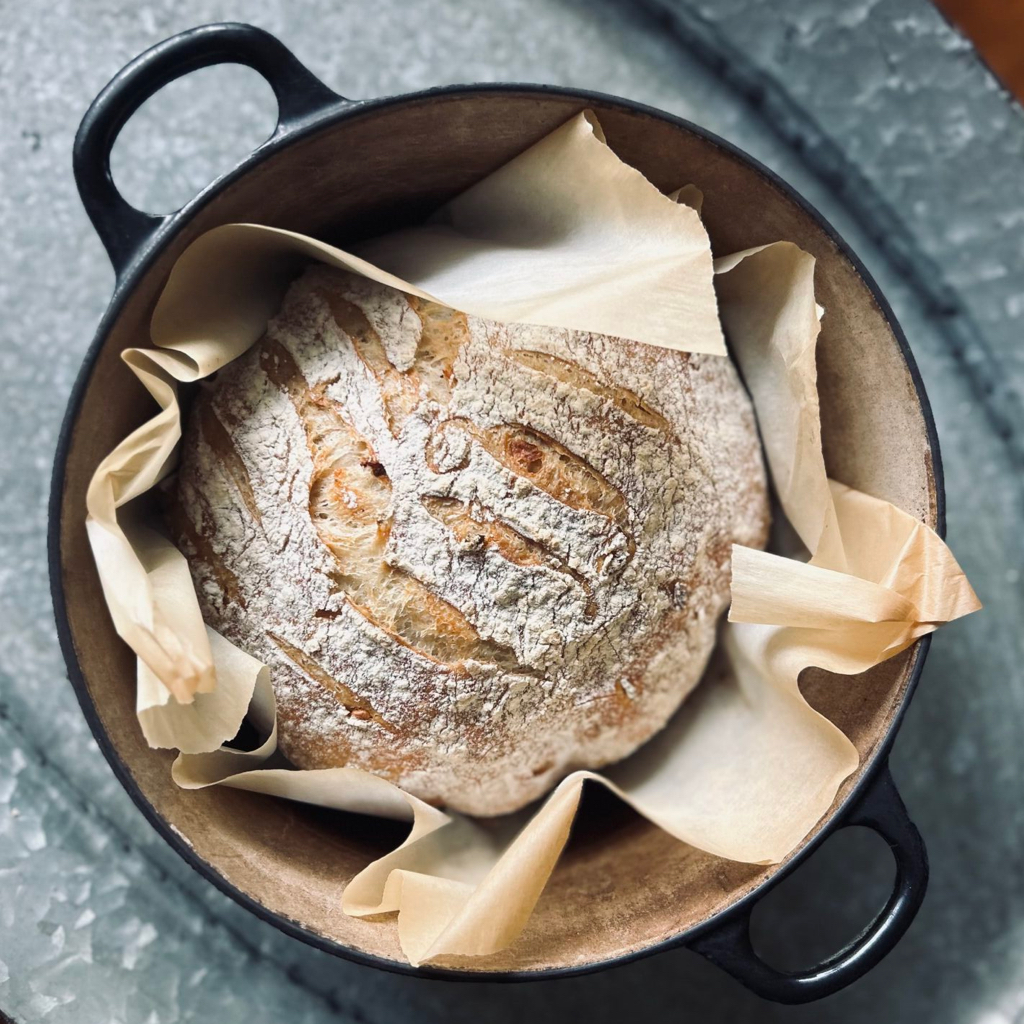
A man decides to make bread, not because it is efficient or saves money or because he has suddenly become interested in hydration ratios, but because something in him wants to touch a process that does not respond to emails and does not care how persuasive he thinks he is. Bread does not care who you are or what you do or how busy you claim to be, and it certainly does not care about your opinions, which is part of its appeal. Bread is honest work. You cannot negotiate with yeast or circle back to fermentation later if it does not go your way. If you rush it, it will punish you quietly and without apology and then sit there looking innocent.
This is how I make it, and the ingredients are aggressively simple:
5 grams of yeast
10 grams of salt
400 milliliters of water
500 grams of flour
That is it. No heritage backstory. No dramatic origin myth. Just four things that have been quietly holding civilisation together while we argue online. You start with the water and add the yeast, and then you stop and do nothing, which is important, because men are famously bad at this part and life waking up does not respond well to hovering.
Flour comes next and salt after that, never before, because salt is powerful, looks harmless, and ends things efficiently if you are careless, so treat it with respect. Then you mix using your hands, because tools remove too much responsibility. At first it is a sticky, unimpressive mess. This is usually the moment when many men briefly consider giving up and ordering something instead. Stay with it. Dough has a learning curve and no interest in encouragement.
Kneading follows, not violently, not like you are trying to prove something – just firm, rhythmic pressure as you fold and turn and push and repeat. If you are sweating, you are trying too hard. If the dough feels tense, you probably are too. Eventually it smooths out and becomes elastic, responsive, and slightly warm, and this is when you stop touching it, because knowing when to stop is a skill that transfers surprisingly well to other areas of life.
Now you let it rise. You cover the bowl and walk away. You do not check on it every five minutes or poke it to see if it is doing anything, because it is quietly, on its own schedule and this will bother you at first. An hour or two later it is bigger and softer and more confident, and you did not make that happen so much as you allowed it, which is a lesson if you are in the mood to notice it.
You shape the dough gently, without punching or dominance rituals, and let it rest again while the oven heats to about 220°, because bread appreciates commitment and repeats its lessons because people are slow learners. Once it goes in, there is nothing left to fix, which is another underrated life skill. When it comes out after about thirty minutes it smells like effort and warmth and something you did not rush, and when you tap the bottom it sounds hollow, which is good and also science.
You wait before cutting it because steam needs to escape and so does impatience. Then you eat it with butter or oil or nothing at all, quietly, standing in the kitchen, probably with coffee. No photos. No posts. Just bread, which feels like enough.
Author’s Note
Bread has a lot in common with other good things in life because it responds best to patience, attention, and knowing when to stop touching it, while force rarely improves the outcome and rushing the process almost always leads to something dense, disappointing, and difficult to swallow, so draw your own conclusions. If this article has made you strangely reflective or lightly aroused by fermentation, that is between you and the dough. I am just here to share a recipe.
And I need more coffee.


Leave a Reply