
To play the game and land correctly Do Not press the buttons just Tap and always land on the Green areas.
Atriums II
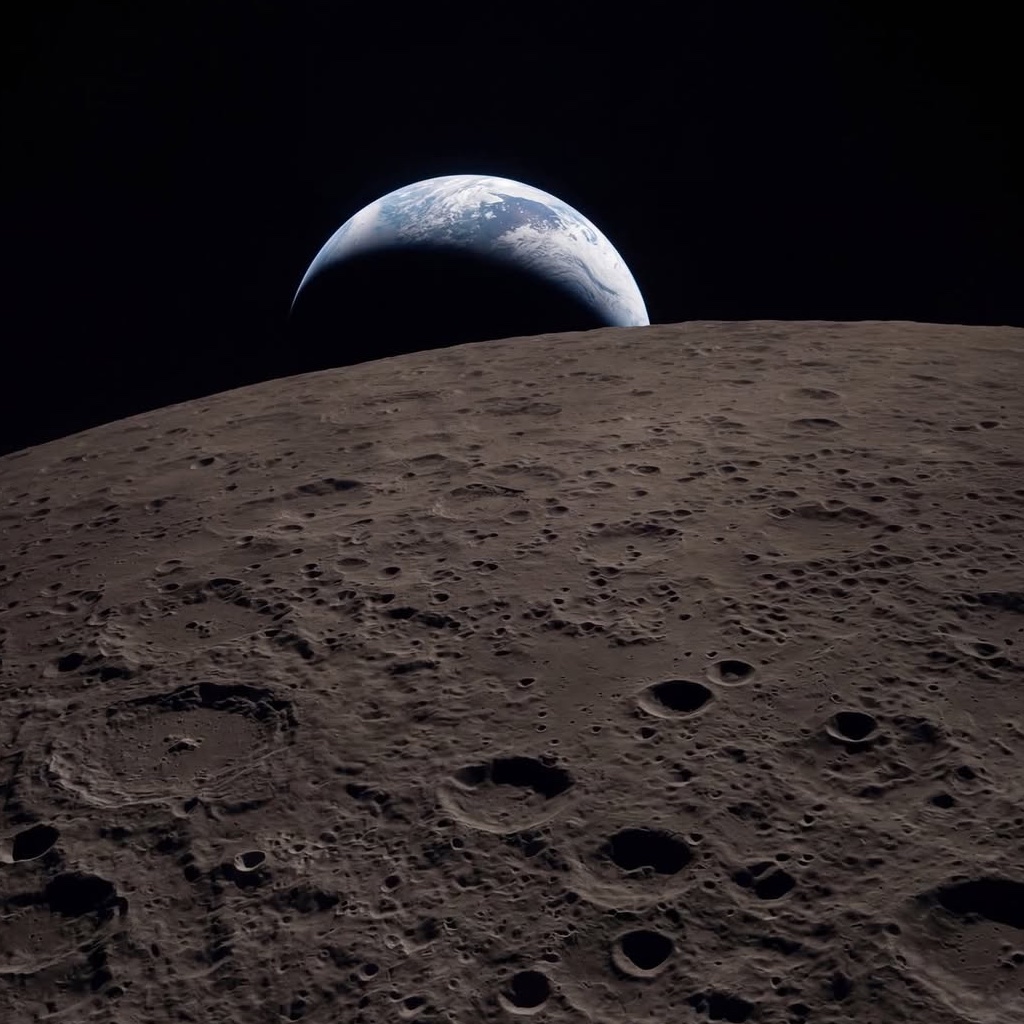
There is something funny about the Moon. It sits there with complete confidence, as if it has never once had to explain itself to anyone.
Apollo went there and made the impossible look briefly reasonable. It flew around the Moon, took the photographs, traced the silence, and proved the old motion was no hoax. Real people built real machines and sent them into a place that does not forgive mistakes. That is not mythology. That is engineering with a pulse.
Atriums is my own little moon lander, and it bears the family resemblance a little too proudly. It looks like Apollo in the way a good sketch looks like a memory. Same spirit, slightly different handwriting.
It falls from the top of the screen with confidence, then immediately remembers gravity exists. The terrain rises like an audience with opinions. The landing pad glows green, which is reassuring in the way a small lighthouse is reassuring to a very nervous ship. You tilt, fire, correct, drift, and try not to become an object lesson in bad timing.
Then, if everything goes right, Atriums settles onto the pad like it meant to do that all along. A tiny astronaut steps out, plants the yellow flag, and performs five cheerful jumps in the lunar dust. It is a ridiculous little ceremony, which is exactly why it works. The Moon gets its dignity, and the machine gets its applause.
And of course, we still do not have perfect auto-landing, not really. Not in the clean, effortless way people wish for. Even now, the final few meters want a human hand, a human eye, and a human willingness to say, “All right, let’s try this carefully.”
One small step for a coder, one giant leap for mankind, and one slightly dramatic descent for Atriums. Which feels about right.
Short Film
On April 1st, 2026, four people left Earth. And somehow, we all went with them. This is a song for the neighbors on rooftops with binoculars. For the kids drawing rockets in driveways. For anyone in Tokyo who stayed up until 3 a.m. For the farmer in Montana who stopped his tractor and looked up.
Reid Wiseman, Victor Glover, Christina Koch, and Jeremy Hansen flew around the Moon – the first humans to do so in 54 years. They named their spacecraft Integrity and for ten days in April, eight billion faces tilted toward the sky. This isn’t a documentary about Artemis II. It’s a feeling about what happens when something impossible turns quietly real.
________
Author’s Note
This is a playful salute to Apollo, to lunar ambition, and to the stubbornly human habit of trying anyway. Atriums is my little tribute to that spirit: part game, part memory, part joke, and part respect for everyone who ever pointed a machine at the Moon and believed it could come back in one piece … Now where did i leave my coffee cup after splashdown ???
Oh, I almost forgot, this is another reason we won’t be wearing hats in the future and if you acidentally pressed the mission launch button the game can be played by using the left and right keys for direction and the space bar for thrust …
Atriums
月というのは、どこかおかしい。
まるで一度も誰かに説明を求められたことがないかのように、あの場所に当然の顔で浮かんでいる。
アポロはそこへ行き、不可能をほんの一瞬だけ「まあ、あり得るかもしれない」に変えてしまった。月のまわりを飛び、写真を撮り、あの静けさをなぞり、昔からの動きが作り話ではないことを証明した。実在の人間が、実在の機械を作り、ミスを許さない場所へ送り込んだ。それは神話ではない。鼓動を持った工学だ。
Atriums は、いわば自分だけの小さな月着陸船だ。そして少しばかり誇らしげに、アポロの面影を引き継いでいる。上手いスケッチが記憶に似るように、どこか似ている。同じ精神、ただし少し違う筆跡。
画面の上から自信満々に落ちてきて、すぐに重力の存在を思い出す。地形は、意見を持った観客のようにせり上がってくる。着陸パッドは緑に光り、それは不安な船にとっての小さな灯台のように、ささやかな安心をくれる。機体を傾け、噴射し、修正し、流され、そしてタイミングを誤った見本にならないように祈る。
そして、すべてがうまくいけば、Atriums は最初からそうするつもりだったかのように静かに着地する。小さな宇宙飛行士が外に出て、黄色い旗を立て、月の砂の上で陽気に五回ジャンプする。少しばかり滑稽な儀式だ。だからこそ、うまくいく。月には威厳があり、機械には拍手がある。
もちろん、完璧な自動着陸なんて、いまだに実現していない。少なくとも人が夢見るような、あの無駄のない美しい形では。今でも最後の数メートルには、人の手と、人の目と、そして「よし、慎重にいこう」と言える人間らしさが必要になる。
プログラマーにとっての小さな一歩、人類にとっての大きな飛躍、そして Atriums にとっては、ほんの少しドラマチックな降下。それくらいが、ちょうどいい。
Leave a Reply