
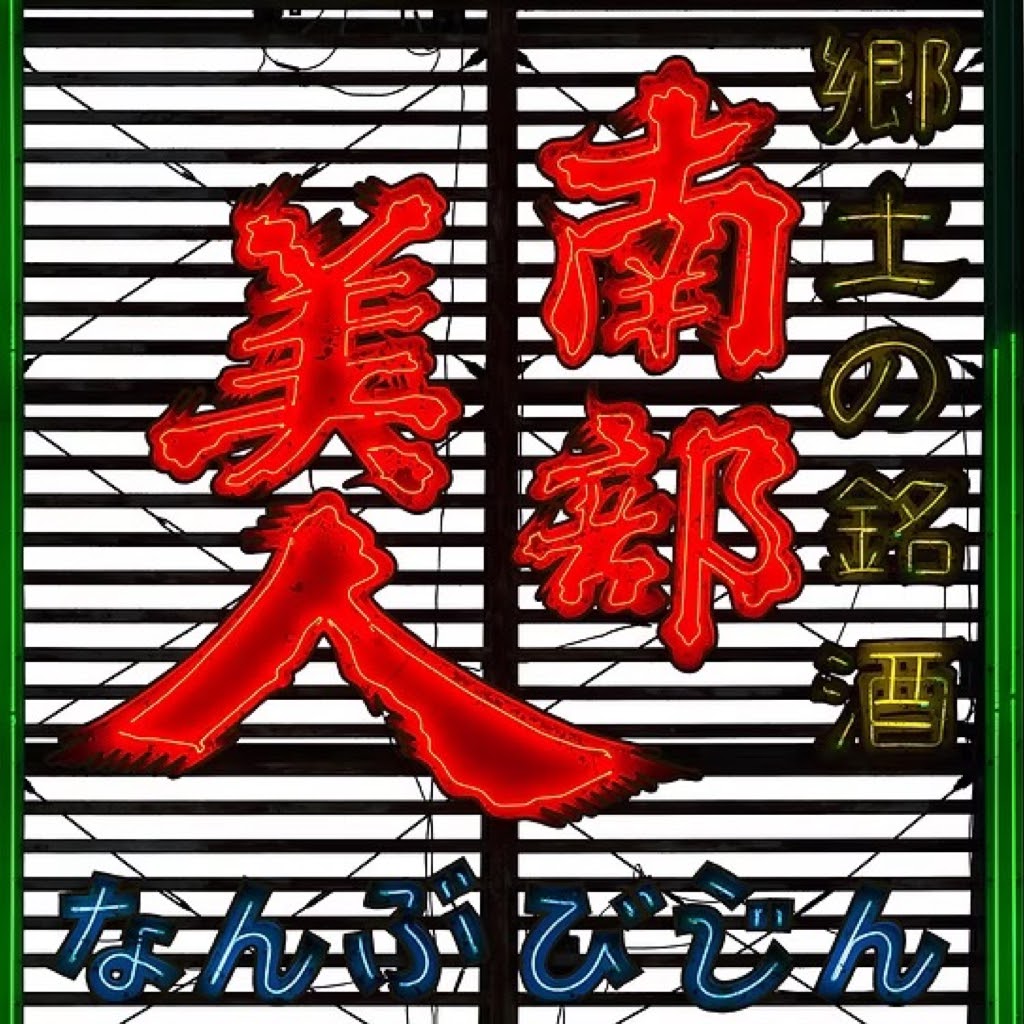
The taxi glides through Shinjuku like a silent needle, threading a tapestry of liquid light. From the back seat, the world outside the glass isn’t quite real. It becomes a pressurized blur of magenta and electric blue, smearing against the rain, turning the city into something softer, something that refuses to stay still long enough to be understood.
When you look at the light of a neon tube, you are looking at something with volume. It is a physical presence, a fragile glass lung filled with noble gas that hums with a frequency you can almost feel in your teeth. This light does not simply land on a surface. It seeps into it. It softens the edge of a wall, a sign, a passing face, until the city feels less constructed and more remembered.
Contrast this with the LED, the light of the modern interface. It is precise, efficient, and exact and does not seep. It arrives fully formed. It turns light into certainty, a clean answer with no residue. What you gain, you lose in atmosphere. The blur disappears, the suggestion disappears and the small ambiguity that once let the city breathe is quietly removed.
But the difference is not only in how the light behaves. It is in how it feels to live under it.
Step into a convenience store at three in the morning and the light is immediate, total. There are no shadows to hide in, no gradients to soften the edges. Everything is evenly exposed, every surface flattened into the same level of importance. It is a light designed for decisions. You are here to choose, to pay, to leave. There is no reason to linger, and the light makes sure you don’t.
It is a different kind of night. The older streets, the ones that still hold on to fragments of neon, offer something else. Light that pools instead of floods. Corners that remain partially hidden. Reflections that stretch across wet pavement and blur into something harder to define. You are not pushed through these spaces. You drift through them. The city does not present itself all at once. It reveals itself slowly, and not always clearly.
Intensity changes behaviour. Bright, even light demands attention and rewards efficiency. Softer, uneven light invites interpretation. One asks you to act. The other allows you to observe.
There is also the less romantic truth. Neon is beautiful from a distance. Up close, in the wrong setting, it can be exhausting. Harsh tubes buzzing above an office desk, flickering slightly, never quite stable. A constant reminder that the system is working harder than it should. The hum becomes something you cannot unhear. The light, instead of softening the world, begins to flatten it in a different way. Not clean, not precise, just tired.
The LED solved that problem. It removed the flicker, the noise, the heat. It made light reliable. In doing so, it also made it invisible. You stop noticing it entirely, which may be the point.
The difference is philosophical. In some places, light is used to reveal everything. It eliminates ambiguity, reduces uncertainty, makes the environment legible at a glance. In others, light coexists with shadow. It allows for suggestion, for partial understanding, for moments that are not fully explained. Neither approach is better. They simply reflect different ideas about what it means to see.
A neon sign is an argument with the physical world. It bends glass, traps gas, applies voltage, and accepts that something might flicker, fade, or fail. It carries the mark of process. The slight imperfection in a curve, the uneven glow, the momentary stutter in the light. These are not flaws. They are evidence that something real is taking place.
An LED is a conclusion. It is the removal of variables. A sealed answer that arrives the same way every time, regardless of who made it or where it exists. It does not negotiate with the material world. It overrides it.
We gained clarity with the new light. We gained stability, efficiency, permanence. We made the night usable. But we also made it thinner. The city still shines. It just no longer breathes in quite the same way.
⸻
Author’s Note
Somewhere in all of this is a craftsman bending glass over an open flame, shaping something that will eventually hum above a street in the rain. Artists like Tsubasa Fujikura treat neon not just as signage, but as a medium, something closer to sculpture than utility. It feels important to mention that, if only to remind myself that this glow was never accidental.
I’ve spent the better part of an hour writing about the emotional life of a gas while standing under lighting that has no interest in being felt at all. It is like writing a love letter to a candle while holding a high-powered flashlight. You know which one is more useful. You also know which one makes the shadows worth looking at.
My coffee is now a cold, dark puddle of quiet judgment. Reflecting the same steady light I’ve been arguing with. At some point, you stop chasing the ghost in the machine and accept that the machine has already won.
Still, I might go make another cup. Just to watch the steam soften the edges…
Leave a Reply