
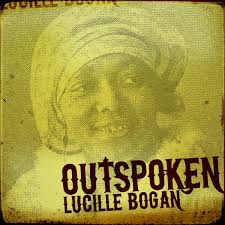
Some nights, after the coffee shifts from inspirational to questionable life decision, I fall into a particular kind of listening. Not productivity tracks. Not algorithmically curated focus soundscapes filled with imaginary waterfalls and emotionally supportive lo fi raccoons. I mean records that still carry the faint scent of human fingerprints, cigarette smoke, and unresolved opinions.
That’s usually when Lucille Bogan walks into the room, sleeves already rolled up.
If you don’t know her yet, Bogan was a blues singer from the 1920s and 1930s whose recordings occasionally make modern streaming platforms act like nervous librarians. Her polite catalog exists. So does her other one, where metaphor takes an early break and language arrives in work clothes.
People often introduce her with a raised eyebrow and the word “dirty,” as if that settles it. But “dirty” is lazy shorthand for something far more compelling. Bogan short circuited the polite machine. She grabbed the coded double meanings of the blues and cranked the volume until the room could no longer pretend not to hear.
Her songs feel less like scandal and more like honesty stretching its legs.
A Japanese word floats into my mind when I listen: honne, the private truth behind the carefully ironed social self, the tatemae. Every culture navigates this split. Edo period shunga prints were explicit, playful, sometimes ridiculous, sometimes tender, and accepted as part of human life rather than a crisis. The West has long staged a theatrical denial of the body, until it insists on existing.
Lucille Bogan simply skipped the denial. Her humor lands blunt but sharp, rhythmic, mischievous. A grin hides in every provocation. She does not silence the room with shock. She invites it to laugh at itself. That laughter disarms shame, deflates respectability’s balloon, and recalls that humans are not clean diagrams. We are noisy, sweaty, contradictory creatures who also crave poetry and good shoes.
What strikes me most is her contemporary edge. Peel away the shellac crackle and you hear the same drive behind internet absurdism, meme culture, and the gleeful toppling of stuffy authority. Long before remix culture or glitch aesthetics, she bent the system to expose its seams. Language was her toy, weapon, wink, and mirror.
Her ownership of voice and body carried quiet radicalism, especially for a Black woman in that era, where such permission came rarely. No manifestos here. Just rebellion through timing, breath, phrasing, tone, and nerve, the kind that laughs too hard to get caught.
In our polish obsessed age of optimization and frictionless feeds, Bogan’s work grounds us. Art need not be sterile. It should smell faintly of life, embrace the inappropriate, excessive, human, and inconvenient. Truth sometimes arrives in muddy boots and a punchline.
Author’s Note
Somewhere amid irresponsible coffee and a stubborn loop that refused to behave, I wrote a song with zero interest in politeness. No hedging, no tasteful distance, just raw honest enthusiasm and a refusal to negotiate with boredom. In hindsight, Lucille Bogan was already in the room.
Different century, different slang, same wiring. Honne with a microphone.
If my neighbors suddenly develop a fascination with early blues, this piece is Exhibit A. I need more coffee and maybe a ciggeret after.

[Intro]
You gotta feel this fire, no fake shit here.
If you ain’t into it, then I ain’t near.
[Verse 1]
You better be all in; don’t half-step this time.
I don’t fuck around with people who don’t vibe.
Respect the heat, no fucking games.
If you ain’t down, I’ll walk, no shame.
I remember when you said no, a shock to my soul.
Most dive in quick, but I need that glow.
Foreplay’s the mission: no tricks, no cheats.
Let’s come together – that’s where the heat meets.
[Pre-Chorus]
If you ain’t feelin’ me, babe, say it loud now.
No pressure, no fake – I’ll turn it down.
Enthusiasm’s sexy, or it’s just plain wrong.
I’m queen of this game – don’t play me long.
[Chorus]
Don’t stop ’til we both get some nookie.
Foreplay’s the king – take your time, no rookie.
Sometimes I wanna get fucked; that’s true, no lie.
But only if you’re burnin’ – let’s feel the high.
[Verse 2]
Love’s a battlefield; passion’s a fight.
Heat it up – gotta fire the night.
Standards too high? Maybe so.
But I want fire. Let’s go.
No slackers, no fakes; I’m a beast.
Bring your A-game or admit defeat.
This ain’t a game; it’s all pure damn grit.
Ready to explode? Yeah, that’s it.
[Pre-Chorus]
If you ain’t feelin’ me, babe, speak now.
No pressure, no fake – gonna turn it down.
Enthusiasm’s sexy, or it’s just plain wrong.
I’m queen of this game – don’t play me long.
[Chorus]
Don’t stop ’til we both get that high.
Foreplay’s the king – take your time, before you slide it in.
Sometimes I wanna get fucked hard; that’s no lie.
But only if you’re burnin’ – let’s really feel that high.
[Bridge]
Fuck the bullshit; done playing it safe.
Bring the heat – no more fake.
If it ain’t real, then what’s the point?
Waitin’ for fire – I’m standin’ on point.
[Outro]
Bring that fire or stay the fuck away.
Love’s a war – scream it loud.
No shame, no fear, just pure desire.


Leave a Reply